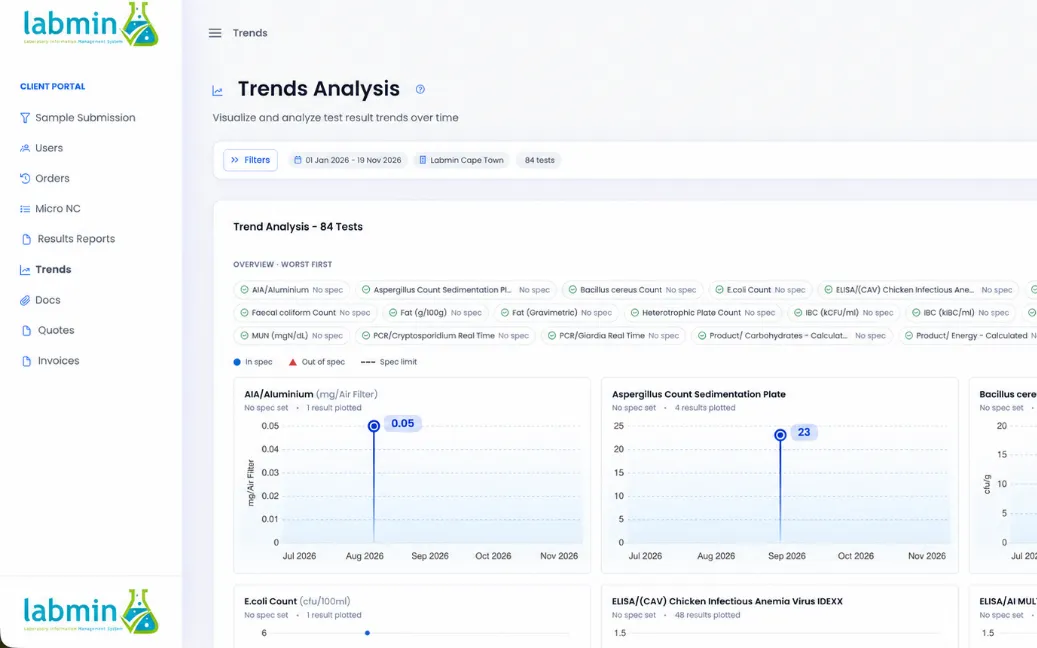
LIMS for dairy, veterinary & specialist labs
Different laboratories. Different reasons to connect the work.
LIMS workflows for water, wastewater, dairy, veterinary, manufacturing, petrochemical and cannabis testing, alongside mining, food, agriculture and cosmetics.
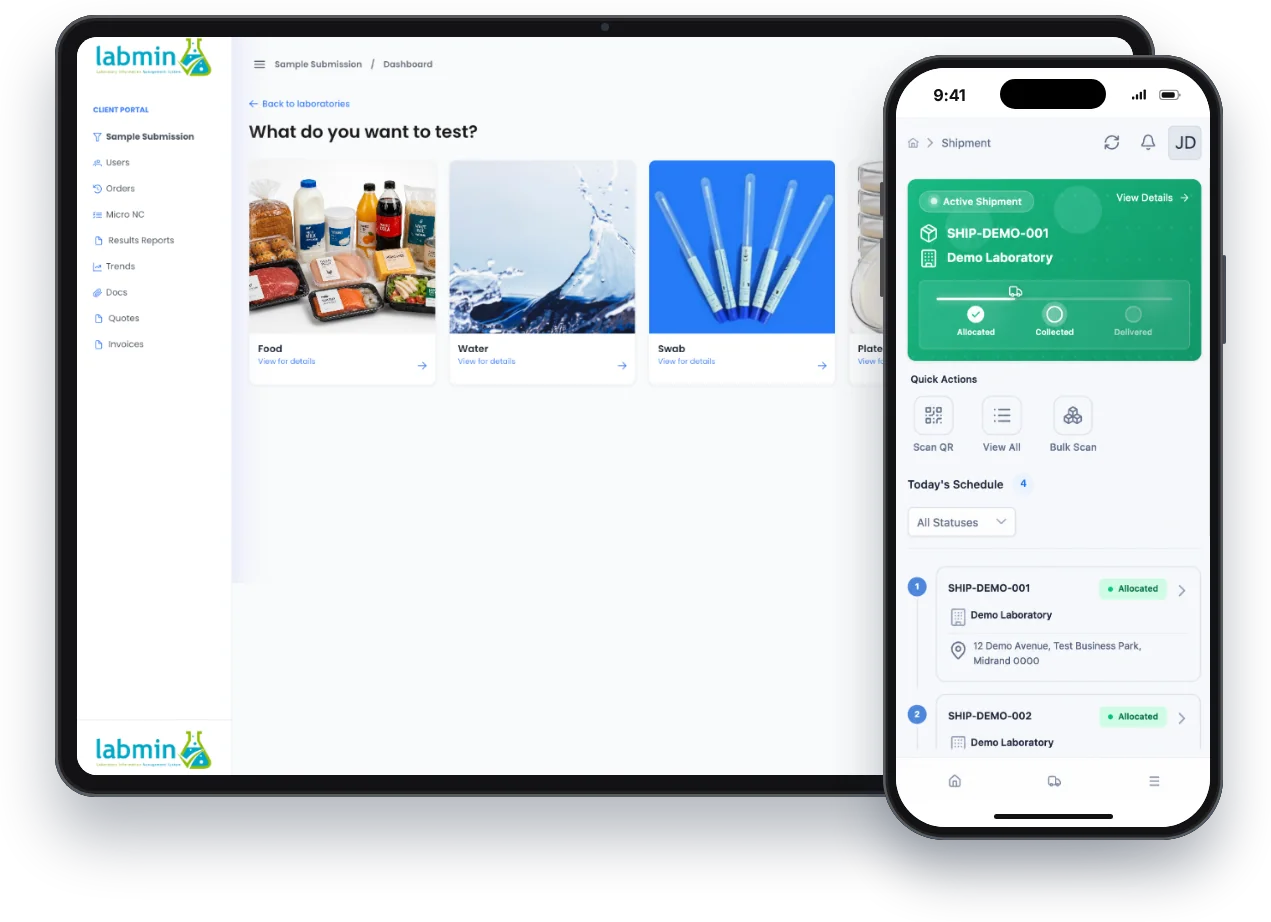
What matters in practice?
Industry-specific LIMS requirements come from the sample, the method and the decision, not just the industry name. Use these workflow examples to define the data, controls and reports your laboratory needs before selecting modules.
Water testing LIMS and wastewater LIMS
Relate each sample to its collection point, source, date and collection conditions. Drinking water, process water, effluent and wastewater may use different methods, limits and reporting recipients.
A useful workflow retains preservation and holding-time context, scheduled sampling, chain of custody and the applicable limit set. Review microbiological and chemical results together where appropriate. Bring sampling forms and actual compliance reports to an assessment with our team; the software doesn’t determine statutory limits by itself.
Dairy laboratory LIMS and food safety LIMS
Dairy testing can involve incoming milk, process samples, finished products and environmental monitoring. Track producer or supplier identity, batch, collection details and relevant storage conditions.
Connect microbiological, compositional and safety results to the correct sample and specification. Define which pending or exceptional results affect a batch decision. In food safety workflows, preserve allergen, nutritional or contamination-testing context instead of treating every numerical result as the same kind of test.
Veterinary laboratory LIMS and agricultural laboratory LIMS
Veterinary requests need species, animal or herd identity, specimen type, requesting practitioner and relevant history. Agricultural testing may use field, crop, soil, fertiliser or residue samples with different collection and reporting structures.
A veterinary workflow should support the laboratory’s defined result review and permitted recipients; it isn’t a substitute for a practitioner’s clinical judgement. Agree patient or animal confidentiality, ownership and the exact portal workflow. For agricultural work, retain field and sampling relationships so results remain useful beyond the report date.
Manufacturing laboratory LIMS and petrochemical laboratory LIMS
Manufacturing laboratories connect testing to suppliers, production batches and release decisions. Petrochemical testing adds context such as product grade, tank, process stream, sampling point and method-dependent calculations.
Map specification versions, units, precision and repeated testing before automating results. Distinguish operational process readings from approved laboratory measurements. Use representative instruments and report examples when assessing integration, particularly where proprietary methods or calculation rules apply.
Cannabis testing LIMS and cosmetics laboratory LIMS
Cannabis testing requirements can include material identity, batch, preparation, potency or contaminant measurements, method context and retained source data. Legal requirements and permitted activities vary by jurisdiction; confirm them with appropriate advisers before defining the workflow.
Cosmetics laboratories may track formulas, ingredients, production batches, stability and microbiological work. In both cases, discuss the actual methods and authorisation process with our team. These examples describe requirements to assess, not an assertion of a prebuilt cannabis module or universal regulatory approval.
Mining, assay and the wider industry workflows
Mining laboratory LIMS and assay laboratory LIMS need preparation history, derived materials, analytical batches and QA/QC before a Certificate of Analysis is issued. Food, agricultural, manufacturing and cosmetics teams share some records but have different review questions.
Explore our existing industry pages for more examples and module scope. Use this specialist guide to identify the additional fields, controls and interfaces needed for your own laboratory. We assess fit through real workflows, rather than assuming a renamed generic template covers every discipline.
Your planning checklist
Use these points to prepare your team’s discussion. Tick items as you review them; nothing is sent or saved.
Answers before the next step.
Are these separate preconfigured Labmin industry products?
Not necessarily. These are workflow examples for discovery. The required fields, controls, modules and integrations must be confirmed for your laboratory.
Can one LIMS cover water, dairy and veterinary laboratories?
Potentially, with appropriate supported configurations and clear data/access boundaries. Each discipline still needs its own methods, context and review requirements.
Where would you like to go next?
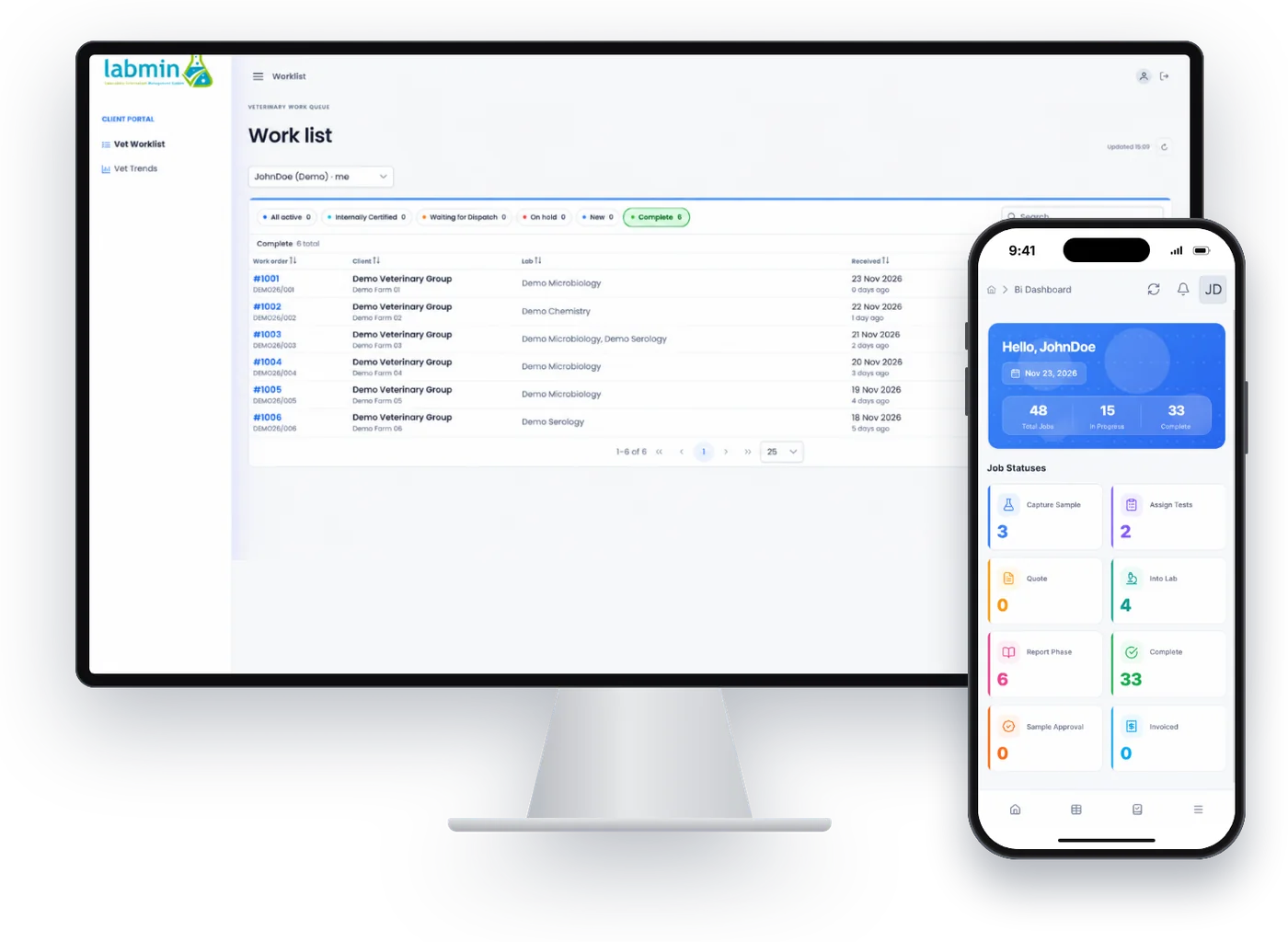
The work around the result matters too.
Laboratory inventory, reagents, consumables, equipment maintenance, calibration, sample storage, retention, worklists, scheduling and chain of custody.
Explore the guide
Quality records that lead back to real laboratory work.
SANAS LIMS and accreditation management: ISO 17025, ISO 15189, ISO 9001, calibration, competency, proficiency testing, non-conformance, CAPA and deviations.
Explore the guideFrom raw material to a defensible batch decision.
Pharmaceutical and manufacturing QC LIMS workflows for raw material and finished product testing, stability studies, specifications and batch release.
Explore the guide